Charge Verification
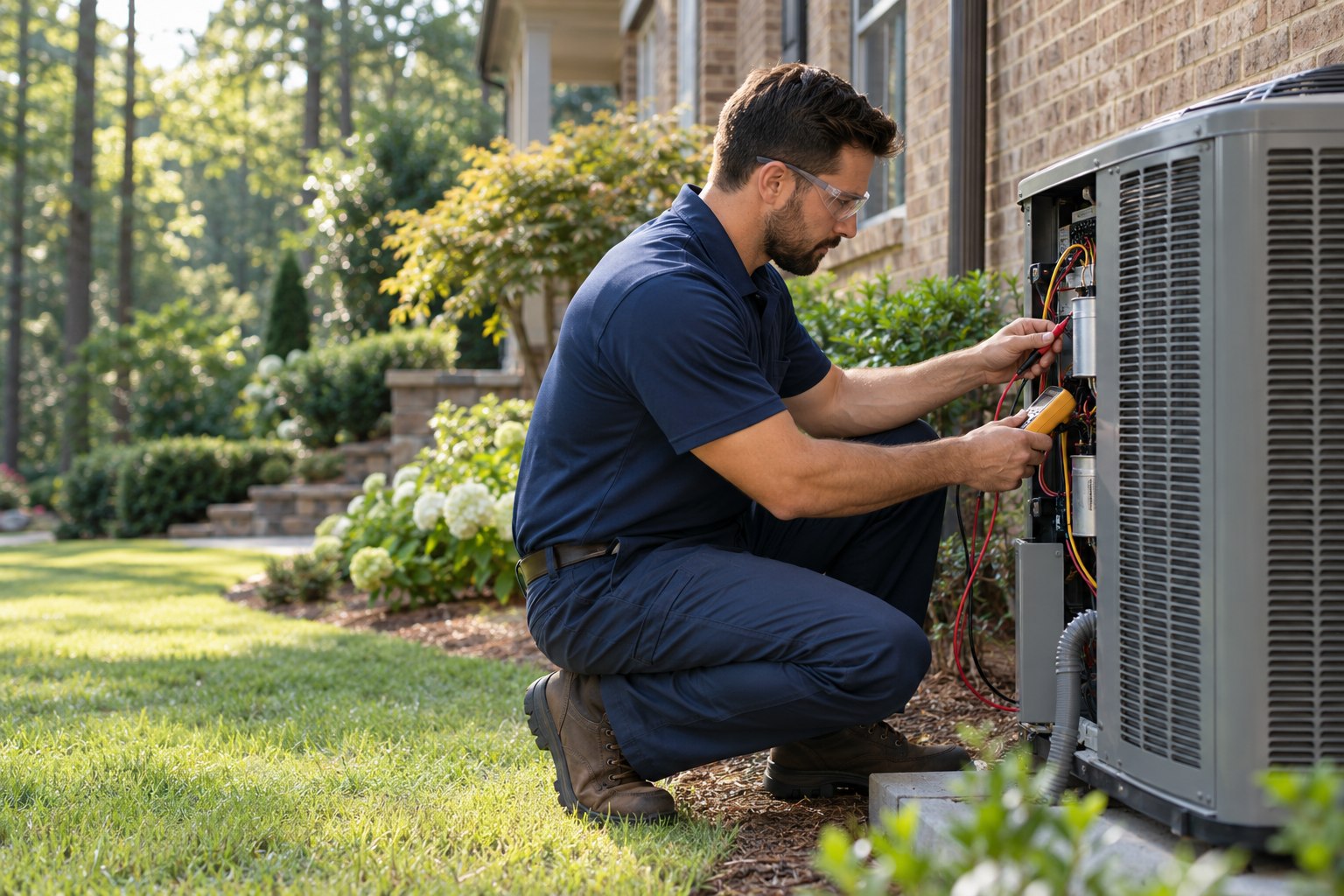
Before adding anything, we measure suction and liquid pressures, line temperatures and indoor conditions, then compare superheat and subcooling to the specifications to confirm the system is actually undercharged.
Cooling and HVAC
Refrigerant recharge in Roswell with leak checks, superheat and subcooling charging, and R-22 or R-410A guidance. Call Roswell HVAC at (770) 661-0066.
Refrigerant is not consumed like fuel; it circulates in a sealed loop. If the level is low, there is a leak somewhere, and simply topping it off only delays the next problem. That is why our approach to refrigerant recharge in Roswell starts with confirming the charge is actually low, then finding out why. Common signs include warm air from the vents, long run times, ice on the suction line or indoor coil, and a hissing or bubbling sound near the equipment. Our technicians measure pressures and line temperatures, calculate superheat and subcooling against the manufacturer specifications, and weigh in refrigerant precisely. We work with R-410A and the newer refrigerants found in current equipment, and we can explain your options if an older system still uses R-22, which is no longer produced and increasingly costly to service.
Before adding anything, we measure suction and liquid pressures, line temperatures and indoor conditions, then compare superheat and subcooling to the specifications to confirm the system is actually undercharged.
Low charge means a leak. We use electronic detectors, bubble solution and visual inspection of coils, valves and fittings to locate where refrigerant is escaping before recharging the system.
Refrigerant is weighed in with a calibrated scale and fine-tuned by superheat or subcooling readings, because both undercharging and overcharging reduce efficiency and can damage the compressor over time.
Older systems using R-22 face limited, expensive refrigerant supply. We explain repair versus replacement honestly, including when a leak repair still makes sense and when upgrading becomes the wiser choice.
When a system is opened for repair, we pull a deep vacuum and confirm it holds, removing moisture and air that would otherwise contaminate refrigerant and shorten compressor life.
After recharging, we check the temperature drop across the indoor coil, confirm the compressor amperage is normal and verify that ice formation has stopped, so cooling capacity is fully restored.
Some contractors add refrigerant every summer and call it maintenance. We do not. A recurring low charge points to a leak, and leaving it unrepaired wastes money and stresses the compressor. Our technicians handle refrigerant according to EPA rules, recover it properly when needed and charge systems by measurement rather than by feel.
We are also straightforward about cost. Older equipment with R-22 or a badly corroded coil may not be worth another recharge, and we will tell you that plainly with the numbers in hand. For newer systems, we focus on finding and sealing the leak so the charge lasts. Roswell homeowners appreciate that we explain the readings, show where the leak is and let them make an informed decision about the right next step.
Request a free estimate
We connect gauges and temperature probes, run the system under stable conditions, and calculate superheat and subcooling to determine whether refrigerant is truly low or another problem is responsible.
If the charge is low, we search coils, service valves, brazed joints and line sets for the leak source and explain whether repairing it is practical for your particular system.
After any repair, we evacuate as needed, weigh in the correct refrigerant amount, fine-tune the charge with live readings and verify steady, efficient cooling before closing up.
FAQ
Answers to the questions Roswell customers ask us most. Still unsure? Call (770) 661-0066.
Common signs include warm or barely cool air, a system that runs much longer than usual, ice on the copper line at the outdoor unit and a hissing sound near the equipment. Higher energy bills during a normal summer can also be a clue. A technician needs gauges and temperature readings to confirm it, since other problems cause similar symptoms.
An air conditioner should never need regular top-offs. Refrigerant circulates in a closed system, so losing charge year after year means there is a leak. Repeated recharging without repair wastes money and forces the compressor to work under stress. Finding and fixing the leak is the only way to make the charge last.
The type of refrigerant, how much is needed and whether leak detection and repair are required all affect the cost. R-22 is far more expensive than current refrigerants because it is no longer produced. We measure the charge, locate any leak and give you an upfront quote after inspection so you know the full picture.
No. Handling refrigerant legally requires EPA certification, and the do-it-yourself cans sold online often contain sealants that can clog valves and metering devices. Overcharging is just as harmful as undercharging. Proper charging requires gauges, a scale, temperature probes and an understanding of superheat and subcooling, which is why this job belongs with a trained technician.
Checking and adjusting the charge on a system with no leak usually takes about an hour. If a leak must be found and repaired first, the visit can stretch to several hours, and a major repair such as a coil replacement may require a second visit. We tell you the expected timeline once we know what the system needs.
Free, no-obligation quote
Tell us what's going on and we'll get back to you with clear options and an upfront price.